Unit 5
Central Banking and Monetary Policy
Definition and Functions of Central Bank
A central bank is a public institution that manages the currency of a country or group of countries and controls the money supply – literally, the amount of money in circulation. The main objective of many central banks is price stability.
Functions of the Central Bank
- Currency regulator or bank of issue.
- Bank to the government.
- Custodian of Cash reserves.
- Custodian of International currency.
- Lender of last resort.
- Clearing house for transfer and settlement.
- Controller of credit.
- Protecting depositors interests.
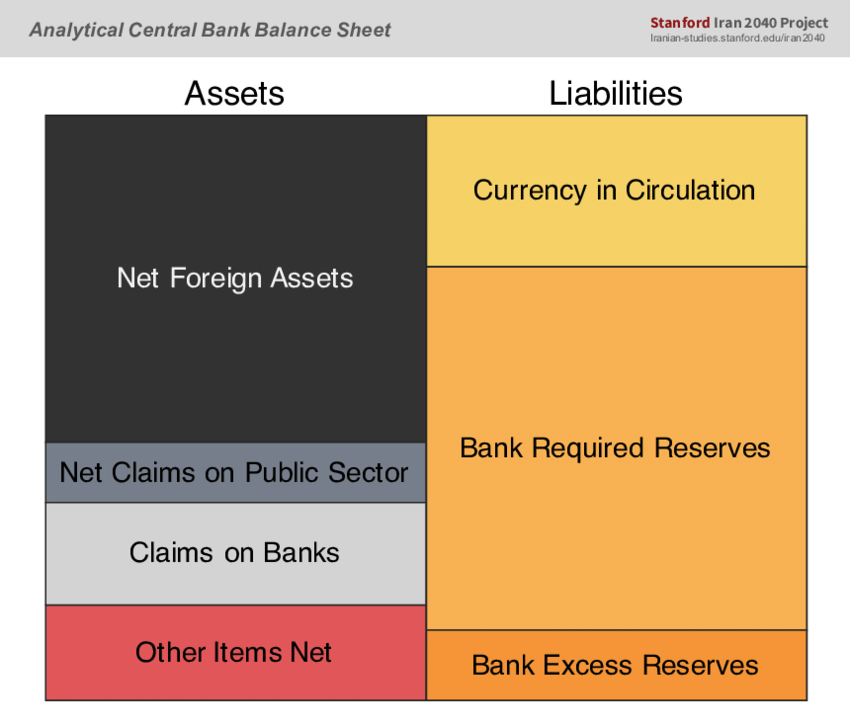
Balance Sheet of Central Bank
The central bank’s balance sheet plays a critical role in the functioning of the economy. The main liabilities of the central bank (banknotes and commercial bank reserves) form the ultimate means of settlement for all transactions in the economy.
Monetary Control or Monetary Policy
What Is Monetary Policy?
Monetary policy is the macroeconomic policy laid down by the central bank. It involves management of money supply and interest rate and is the demand side economic policy used by the government of a country to achieve macroeconomic objectives like inflation, consumption, growth and liquidity.
Monetary Control
Monetary policy is the control of the quantity of money available in an economy and the channels by which new money is supplied. Economic statistics such as gross domestic product (GDP), the rate of inflation, and industry and sector-specific growth rates influence monetary policy strategy.
Goals or Objectives of Monetary Policy
the objective of monetary policy varies from country to country and from time to time, a brief description of the same has been as following:
(i) Neutrality of money
(ii) Stability of exchange rates
(iii) Price stability
(iv) Full Employment
(v) Economic Growth
(vi) Equilibrium in the Balance of Payments.
instruments of monetary policy
The main instruments of the monetary policy are Cash Reserve Ratio, Statutory Liquidity Ratio, Bank Rate, Repo Rate, Reverse Repo Rate, and Open Market Operations.
Current Monetary Policy in India
RBI Monetary Policy 2022: Key pointsRepo rate or key short-term lending rate increased by 50 basis points (bps) to 5.4 per cent for the third consecutive time in 2022. 140 bps hike in repo rate since May 2022 to control inflation.
Monetary Policy in the Open Economy
The key element in the monetary transmission mechanism is the ability of the central bank to influence the real interest rate. Changes in real interest rates lead to changes in spending on durable goods, which are a component of aggregate expenditures.
Monetary Policy in the Rest of the World
The United States or India do not exist alone in the world economy. US and Indian financial markets are influenced by events in other countries, such as the actions of the ECB. Likewise, citizens in Europe are influenced by monetary policy in the United States.

 irtayag academy